 no arctic, no animals,
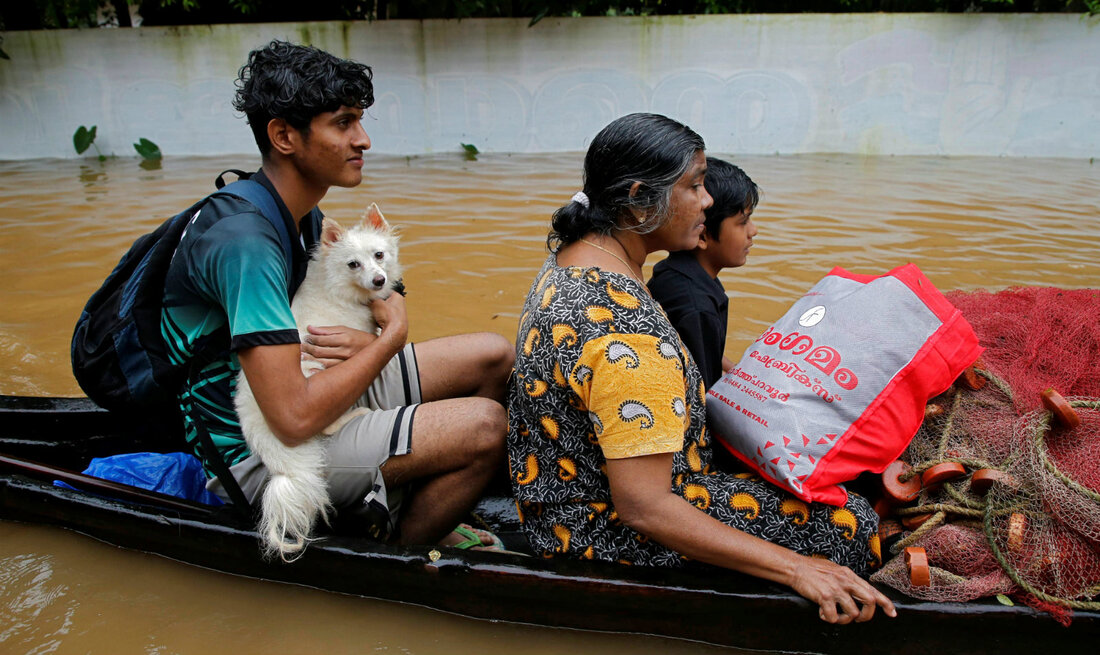
esp. no arctic animals — so no news about how “polar bears in russia’s arctic increasingly resort to ----------- as growing human activity & development shrinks their hunting grounds” while “climate coverage in 2019 still made up only 0.6% of overall corporate broadcast t.v. news & talk shows” [u.s.] while “medical schools focus more & more on treating patients affected by the impacts of extreme weather & changing climate patterns – like asthma attacks from wildfire smoke, heat exhaustion from sweltering temps & diseases carried by insects moving into new locations . . . ‘the sense that we’re at an emergency level of this crisis has finally started to sink in’” (so to speak) but “for a modern american audience, it is hard to convey just how devastating swarms of locusts can be: they can move up to 100 miles in a day. they eat as much as 35k people do. you really have to go back decades in the u.s., to dust bowl days, to understand just how devastating this can be” even as “the rains began in december in burundi, where roads, bridges & crops have been destroyed, livestock killed & vital water access points washed away. houses built of mud bricks have literally melted in the rain . . . ‘i am desperate,’ she says. ‘i have no idea where i am going to sleep tonight. we have lost everything’" not to mention “climate change-driven global warming is a factor behind repeated instances of severe flooding across greater jakarta since early jan.” and “another downpour or two could push many communities in madagascar past their annual rainfall amount before mid-march” meanwhile, in australia, southernmost outpost of the global north: “when you're lined up at the supermarket, green grocer or deli getting your grocery shopping sorted, the people who actually grew and produced your food are the last thing on your mind. but this bushfire disaster, which hit our most productive areas brought primary producers to the front of our national psyche” while, back where you are, what’s at the front of your psyche, dear reader? . . .
0 Comments
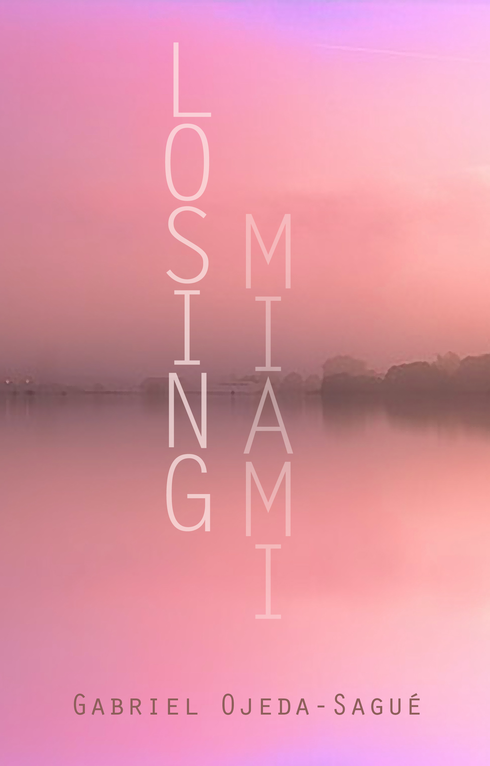 I finally got around to reading Gabriel Ojeda-Sagué’s poetry collection Losing Miami (The Accomplices, 2019). The title has a double meaning: the author/speaker has moved away from their hometown (and you can’t go home again), and in the meantime, the hometown is being lost to the waves. The book begins:
start with sinking: I was raised in a city that could be swallowed by the sea within the next century start there It’s not a book about climate change — at least not in any simple or straightforward sense. But the poems are about a city where you can never get away from the issue of sea-level rise (hence the City of Miami has a Climate Resilience Committee). In the prose poem “I Do Not,” the speaker is told by a gorgeous straight man that it is all about taxes. That we can make money differently. That the gentrifiers are buying higher altitude property and pushing the poor to lower altitude neighborhoods where houses will be lost first. It’s funny to think of “altitude” in a place as flat as Miami — but that’s the very reason Miamians have to think about altitude. And it’s not like storm surge is the only Miami problem the book presents: there’s overloaded sewer lines and leaking septic tanks, for instance. There’s being gay and cubano in a culture that doesn’t like either. And there’s all the ordinary bullshit of life that poets write about. Still, weaving between the traffic jams and personal insecurities, climate chaos keeps showing up: “Don’t tell me that it’s literally all my actions causing this, even if it is. I can’t figure that one. Instead, be honest and tell me it is ones with larger influence. Ribcages of corporations. Day to day in a government.” This is a bilingual mixed-genre book. It splices prose and verse, lyric meditation and nonfiction thinking, as in this section of the serial poem “Losing Miami”: If I could prove you wrong phoenix of sand “vertical living” I aspire to joystick control of a crab walking forwards drowning on the turnpike leaping off the turnpike Is this the miracle of the inventing mind? Really? Island nations and coastal cities close to drowning in the ocean? As a species we can invent anything and have, do anything and have, but the whole time, the thousands of years we’ve done it, this is its byproduct? I am trying not to show it but I am enraged. I feel cheated by consequences I cannot fully comprehend. I feel guilty enough in causation but unequipped to remedy my/our actions. This is a deep and slow rage, one that I can’t fully feel at the precise moment, but one that flatly spreads across the present and possibility. The prose bit doesn’t necessarily say anything that hasn’t been said before, but it says it well — and it’s so rare to hear a poet say as much, in as many words, that reading the book is very refreshing, if depressing. The poems’ mercurial zigs and zags from image to thought, along with the word play — in both Spanish and English and between Spanish and English — never let the poems become overly saturnine. They feel like what I feel like Miami is like. Indeed, Ojeda-Sagué can get pretty funny: I hum, a category 1 is not enough to lift the ocean and pour it into my pants at least not here, but it can evaluate a coast, and set it aside, or it can destroy New York, but even I can destroy New York The sang-froid of the hurricane veteran can quickly devolve to ennui — and ennui masks a certain restlessness: I wish a hurricane were more dramatic, came with sandbags seething in spin, hit citizens with sandbags to displace them . . . . . . the Godzilla we always wanted, thought would come sooner If the Big One is always coming, will you even notice when it comes? This is the tension that swirls over the book. Things get worse, little by little; whole generations grow up with climate crisis and don’t know anything else. And we can’t read what’s right in front of our faces, because we can’t imagine what it portends: water is rising that’s the obvious but the hardest is to concede treasures to an imaginary coastline Those are fake pearls that were his eyes? Or real pearls and fake eyes. The Big Take-Home from Losing Miami is that the issues we have with climate change are not that far removed with the issues we have with everything else — indeed, proceed from and are enmeshed in the “everything else” of our lives. And that’s a valuable insight, even if you don’t know what elevation you’re at. 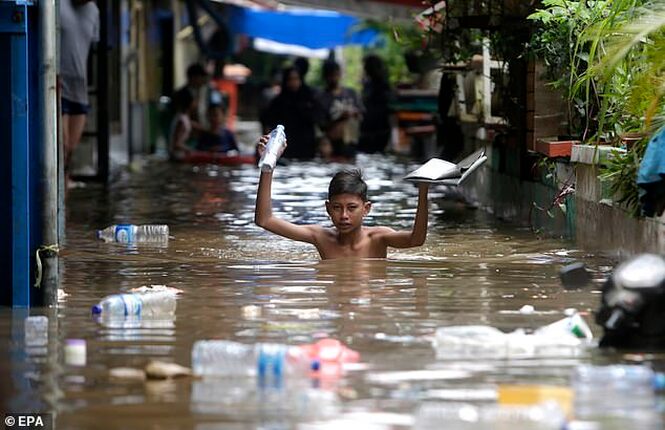 another democrat debate,
another evening free of climate questions -- at least the billionaire hedge-fund manager brought it up . . . & i read where the seed vault stashed away indigenous american corn, beans, squash, along w/ 60k other new old samples another day, another flood barrier busts along the river severn, another u.k. town inundated; u.s. corps of engineers just engineered a fix for levees breached in the last flood season, just in time for the next one another day of devastation farther south: the desert locusts have made it to the d.r. congo; the price of tomatoes in kenya 7x ↑ in last few weeks: few weeks of rainy season w/sudden heavy downpours destroyed the crop; even rice paddies under too much water in karnataka (only 16% of normal crop this year); & “jakarta is submerged,” too-- again; w. australia pummeled by cyclones; and 20% of the country’s forests reduced to cinders; & drought hitting new zealand now “we can’t say climate change caused any weather event. what we can say is that the probability of such events increases due to c.c.” -- which is why i bring you so many of the probable effects . . . the “bats in dec., bluebonnets in jan., butter- flies in feb.,” the day after the day after day . . . 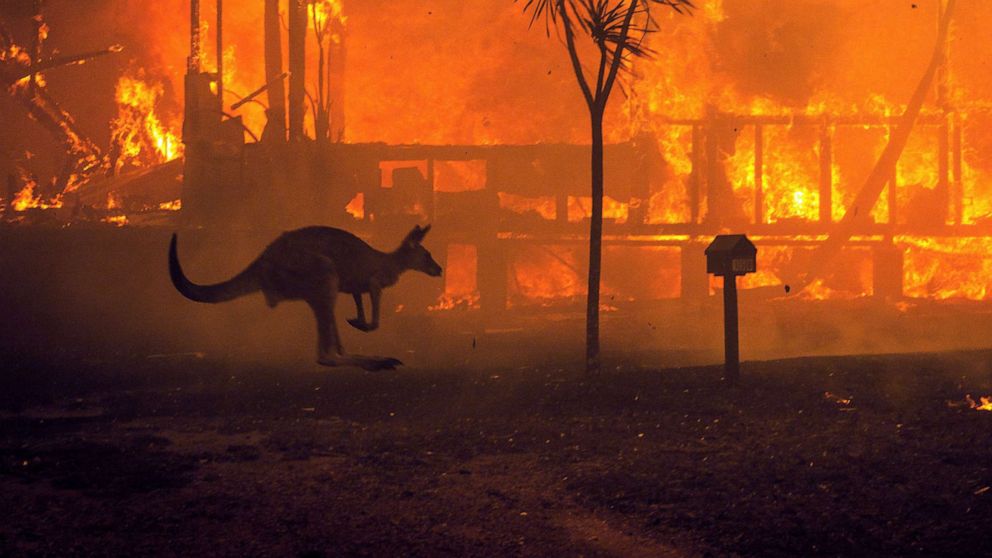 The war to prevent war has re-begun. It’s hard to be a saintly nation, certain of its virtues, its kindness, the generosity of its violence. They are bad men because they kill us, but we are good men because we remove them from this earth, by bomb or by drone. It’s done. No matter if we call the play from the office that lacks corners (he was astonished!) or from the golf course. Its faux slice of nature does include traps, though they’re easily evaded with a mulligan or two. Just like the convoy of death, several wars ago; beside the trucks you might find family photos or IDs, but inside there was only ash. Ash falls on the eastern shores of Australia. He walked through Sydney and “smelt of smoke.” I was surprised by the “smelt,” though that is what men do to metal to make it. When it’s hot, it bends, but earth is more like a paper straw that’s been bent so many times it’s wilted, like flowers, like travelers in the heat. But back to the actual war, not the one we poured gasoline on before hiding out on a bleached reef or simmering roof, we’re left in an attending position. I waited for signs of life on the screen, but the tech refused to tell me what it meant. The phone calls came later. Like secret messages from your enemy, wishing you the worst as you try to balance hope and cynicism, finally binding them with ribbon, then putting on a prefabricated bow for good measure. The festive time of year comes crashing to a halt with the news cycle, which is one. No more are linear histories possible; it’s all circulation, traffic circles without exit, an Irish refrigeration truck bearing down on you from what only seems the wrong side of the road. When you get to the turn, you have to calculate desire against circumstance, habit against this new frontier of obeying the local laws, shifting with your left hand, steering on the right. Tasman forests burn, the outskirts of Sydney burn, a woman collapses in Canberra from the smoke. Earth dies by our suicide. The writing that’s intended to go abstract, intended to avoid the knife in the back that stays in the back, the never healing from this damage, the PTSD that is no laughing matter, the bending over weeping in the kitchen not knowing how a man could do that to a boy, or a nation, or a koala. State flags fly upside down from legions of pick-up trucks. Pam has lost her fight, she writes, but wants to kill every politician in Australia. Grieving her partner’s daughter’s father and the bush, which is expansive but hardly abstract. The reason Australian irony is so strong, Tranter said, is that if you’re in trouble and you leave the city for the bush, you’re dead.
_____________________________________________________ Susan M. Schultz lives and works on O`ahu near coastal roads that erode into the Pacific Ocean. She is author of two volumes of Dementia Blog and more volumes of Memory Cards. Her most recent book is I Want to Write an Honest Sentence, from Talisman. As publisher of Tinfish Press from 1995-2019, she published a great deal of work from Australia, including the recent anthology, Ashbery Mode, edited by Michael Farrell. On one visit to Australia, Ann Vickery took her to see penguins, koalas, platypuses and emus, all of them now in danger. 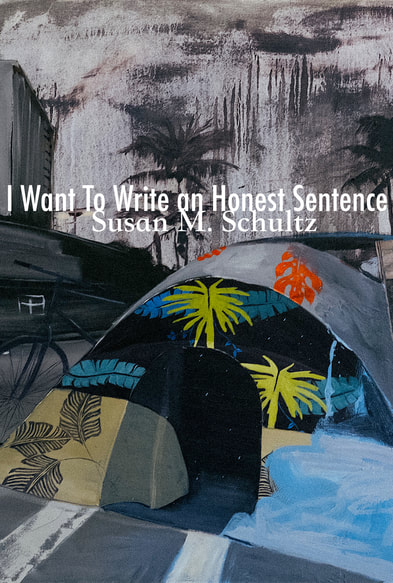 Tune in tomorrow for a brand-new Meditation by Susan M. Schultz. What does political assassination have to do with wildfire ? Find out -- Don't miss it!
 last week’s city
commission meeting: 3 ½ hrs. on air b&b -- to regulate or not to regulate -- 45 minutes on climate crisis: my livelihood, my peace & quiet next year trumps (if i may) the risk of house- lessness in 10. i mean, who knows what will happen 10 years from now? nobody, that’s who. but we do have a pretty good idea: a whole lot of people from the coasts are going to need air b&b’s, regular b&b’s, apartments, section 8 housing, home- less shelters or free tents in these parts if things keep going like they’re going & the paper didn’t report it, but the commish committed the city to 100% re- newables by 2035 (the sun- risers talked them down from 2050). i’ll report back in 2035 . . . meanwhile, back in 2020, here’s what was happening: a 37 mi. x 25 mi. cloud of locusts in kenya (one of many in e. africa & arabian pen.); & a sq. mi. patch can eat as much as 90 k people would in a day (meaning the 90 k will have to look for food elsewhere . . .); “bible coming to life?” (jerusalem post headline) “breeding fast . . . changes in global climate patterns . . . major cyclones, heavy rains . . . india has managed to prevent a swarm of biblical proportions from spilling over into bangladesh, burma, & then china—where the coronavirus has already paralyzed much of the country’s activity. but it’s not clear how long that line will hold,” what with them being active all winter, & when one locust lays 300 eggs in 3 mo. (in saudi, march will see them hatch, for round 2); o — plus which — they emit a foul-smelling secretion that deters birds from eating them (climate “change”: it’s not just for sea-level rise anymore) flash floods, land- slides in s. peru & flash floods, land- slides in java (buy hey only 14 people killed — not disasters, right?) & "some people are getting enormous rain & their next-door neighbours are getting virtually nothing," sez the rancher in w. central n.s.w., whose 30 dams are dried up, while the coast is getting pummeled; while in lituania, this early feb., “trees and plants bud, forget- me-nots sprout, butterflies flicker on a sunny day”: lovely weather! (for june); weather is news but weather is not climate, therefore climate is not news but in 2018, “61% (17.2 million) of the newly-displaced were by natural disasters; 39% (10.8 m) by conflict and violence” — rethinking “front line” -- which will be great for the air b&b’s, if any of these folks salvage anything before they fled 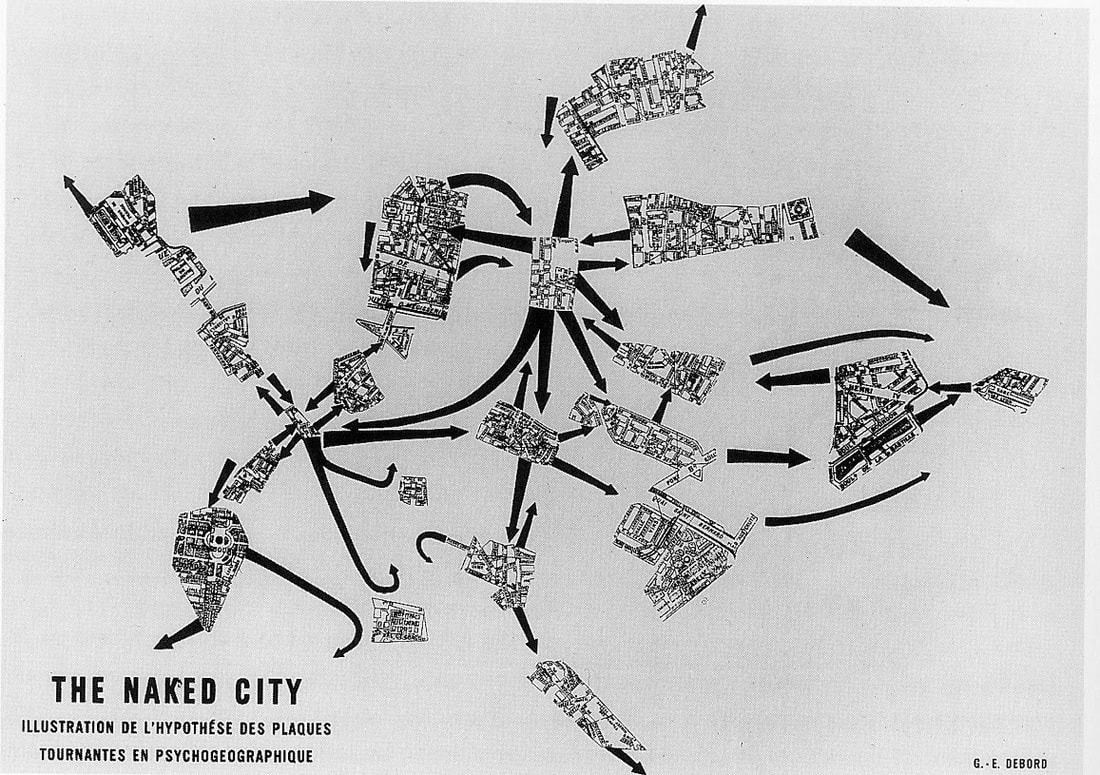 Finally, a third text: an interesting little treatise, written by a Dane, Morten Swenstrup, called Towards a New Time Culture. Swenstrup begins from “Michael Serres’ insight that the principal component of the ecological crisis is time.” Sure, there have been moments in the natural history of the earth when there was as much CO2 in the atmosphere as there is now, but it took millions of years to build up – species had time to adapt. And climate change happened slowly enough to allow for the emergence of new species (e.g., homo sapiens). But if a giant asteroid hits . . . well, it’s just extinction of most and hope for the rest.
In this case, we are the asteroid. Swenstrup’s thesis is that “the mechanistic temporalities that exist in society” (i.e., clock time) can be countered by art, which “has a ‘knowledge’ of time” – a knowledge that is a bit more organic and phenomenological than Mr. Taylor’s stop-watch – “living rhythms, rather than goal-oriented production.” This might remind one of Henri Bergson’s distinction between clock-time and durée, time as experienced by the individual. Swenstrup cites Henri Lefebvre’s notion that “the body proportions the rhythms we sense.” Abstract temporalities become tangible in an actual “physical place, namely a human body . . .” In other words, the demand – need – for economic growth runs up against what the human body can take, a limit that is “an anchor value” for evaluating time. And, by extension, the biosphere becomes a kind of physical meta-body. The implication of all this is that art has a power to counter the ecological crisis by introducing a different temporality. This is all very nice, except in those cases where there are only two choices: speed-up or starvation. Human bodily limits are met and exceeded, one could argue, in chattel slavery and sweatshop labor. Taylorization is a kinder, gentler version of this drive. A striking might slow speed-up to zero, but it can also get you fired (or killed). None of that vitiates Swenstrup’s or Lefebvre’s point; quite the contrary. Or Ivan Illich’s observation that a “linear sense of time progression inherent in the idea of development implies that there is always a better and a more.” There aren’t. And what constitutes more-and-better depends on your subject position. In any event, clock-time turns the future into something abstract, a fungible resource, like money, composed of empty and equivalent units. Linear time and a disembodied future inevitably lead to acceleration – e.g., in the number of work hours necessary to earn a wage. This process is made to seem inevitable. Time is, in effect, an ideology. And work is not the only thing accelerated – so is information. The amount increases at a rate faster than the capability of the human nervous system to assimilate it. So everyone shouts louder to be heard, and soon all is noise. One no longer lives “in the world of things,” but in a semiosphere that spins faster and faster. One way that art can counter all this is by introducing and valuing cyclical, as opposed to linear, time. Some have argued that this move is feminist, insofar as cyclical tasks traditionally have been assigned to women and girls (think changing diapers), though that strikes me as a bit essentialist. In any case, in cyclical time, things change, to be sure, but at a much slower rate (cloth vs. Pampers). Having recently taught some Gertrude Stein, this idea makes some sense to me, in formal as well as thematic terms. But a thoroughgoing shift to cyclical time, it seems to me, would entail making art far more slowly and de-emphasizing innovation/originality. Many would see this move as regressive. But I think that’s Swenstrup’s point. “Art is a sphere in which many societal demands can partly be suspended,” he writes. This statement brings out my inner Situationist. For the French Situationists in the 1960s, the only possible context for free art, in the sense Swenstrup envisions, was that of a general strike (they made & performed a lot of art in Mai 1968). In other words, art and social organizing cannot be divorced, if one wishes to make changes to either. So the Situationists created “art” interventions that disrupted the ordinary economic flow of things (I think of the work of artists and writers in Extinction Rebellion as a kind of latter-day echo of this tactic). But then Swenstrup modifies his claim: “In any case, art offers the possibility of being less affected by acceleration. It may therefore be possible to encounter rhythms and temporalities in art that do not exist in very many other areas of society.”* Those are indeed possible possibilities – certainly the latter. The art work has “something to teach about time” if its “temporality takes the form of bodily experienced rhythms.” Can an art work self-consciously bring the other’s bodily rhythms into itself? Such a non-accelerative, cyclical temporality in literature might mean valorizing certain forms over others. The realist novel, with its linear chronology (even regressively linear “flashbacks”) would have to go. And cyclical forms in poetry (e.g., villanelle, sestina, Steinian “insistence”) might be more highly prized. Montage, as a form of narration, would embody this ideal more than plot, and perhaps more cyclical or recursive forms of narrative would do so as well. Concrete poetry (words, phonemes, characters as “things”) would be “in.” The avant-garde (qua avant-garde, anyway) would be “out,” insofar as it has to constantly come up with the New — constantly have something to be avant of (cf. Peter Bürger). Recycling of traditional forms & themes (pastoral, love poems, praise-songs, etc.) would be “in.” Both Futurism and Tennyson would be way, way “out.” But more than the textual form of the work, Swenstrup has in mind the social form of the work: its manner of production & consumption, distribution context, the audience’s use of it. All of these need to slow down: “[A] work of art takes all the time it needs,” he asserts. He doesn’t simply mean a long novel takes a long time to write – or the multi-century musical works composed by John Cage and others. “Even a poem can be said to have its own reading pace.” That is, if one isn’t skim-reading it to get to the next poem and the next, in order to be a more productive writer/teacher/reviewer. “Turning toward the work allows the artwork to lead an audience into its ‘drama,’ to become participants”: I think Swenstrup has in mind a somewhat passive attitude towards the work (Wordsworth’s “wise passivity”); a more active version of this sentiment might be found in Brecht’s epic theater (or Situationist situations). Finally, Swenstrup asserts, “Beauty means to eliminate ownership.” He doesn’t just mean eliminating ownership of artistic and intellectual work (though he did publish his treatise under a Creative Commons license). I think he means eliminating ownership period. And there’s the rub: ownership is pretty entrenched. But maybe subverting or sharing property, slowing down the labor-hours the bosses buy, the accidental sabot dropped into the gears, a transit strike, a general strike – these could be art forms, too. Maybe the most beautiful the world has ever known. ____________________________ * He calls an encounter with such art “the peaceful gaze,” indicating he is thinking primarily of visual art. We all want a peaceful gaze – or a peaceful anything. But capitalism and imperialism just won’t leave some people alone. I can’t help but think of the Clash’s song “Safe European Home.” 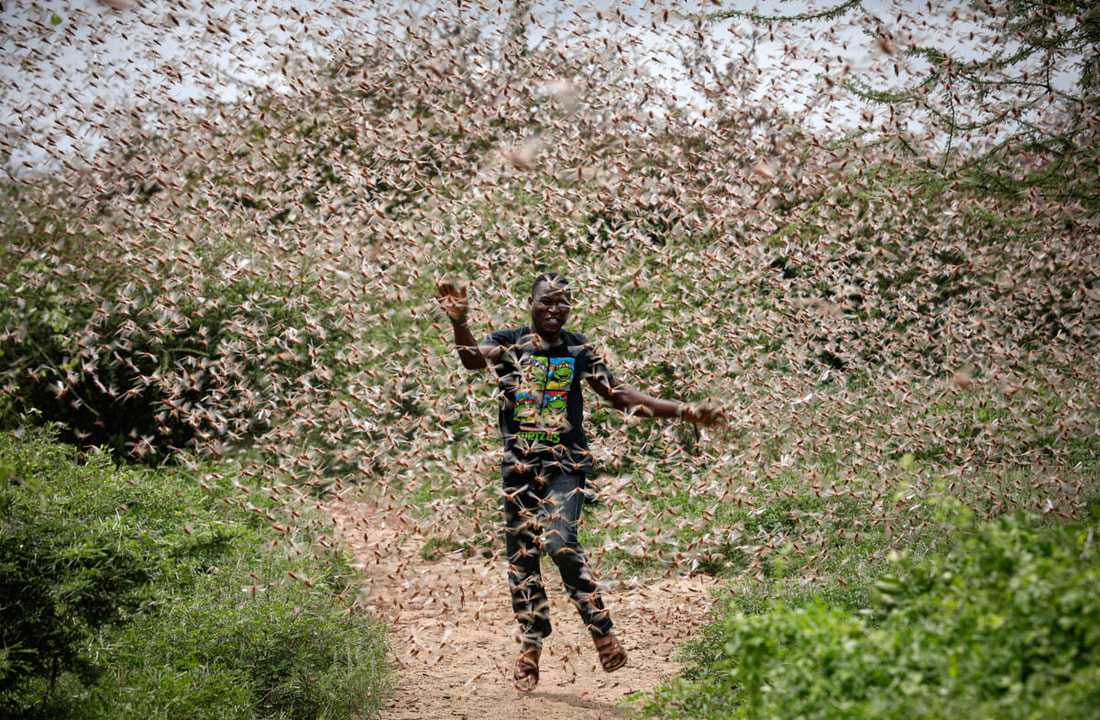 “what’s happening at the south
pole is really terrifying,” the anchor sez; “it really is,” the co-anchor agrees. “now, in headline news . . .” they’d just shown time-lapse nasa footage of the pine island glacier “calving” (awww – that sounds so cute, but isn’t) sending ice the size of manhattan, naples, 1/3 of paris (+ a few small nations thrown in for good measure) out into the sea to melt away -- shifts in the arctic oscillation -- (news that’s gonna stay news . . .) yesterday, we were right on the money for normal hi unlike anchorage, which hit a record hi tues (44 f) at midnight, but had record snow (8.9”) 24 hrs later . . . & hibernating animals at zoos in n. europe are waking up . . . “according to global averages, january was the hottest month in recorded history” [. . . pause . . .] & in “a village near to lyme regis” (u.k.), an alleged tornado — power lines, trees down -- “my neighbour’s boat weighed 300 to 400 lbs & moved about 14 ft across his garden, swivelled around a number of times & the keel made indentations in his lawns where the wind picked it up and moved it” -- which sounds like a twister to me (guardian: “flooded britain: a new normal?”) record hi’s in florida (“like summer”); last yr hottest ever on is. of oahu; “sprawling fields turned into large lakes throughout west tennessee,” including halls tn., near my dad’s hometown — brings it closer to home somehow — even though i don’t live in the flooded trailer park (always the poor folk live in lowlands); & in n.s.w., first fires, now floods (17” of rain last week) & inevitable mudslides: "i just saw this massive piece of earth coming at me, it was absolutely horrific … the feeling that you're going to be buried alive” . . . but 99% of the state still in drought: they’re trucking in water out in the bush, where “the river hasn’t run since 2017,” where “the farmer shot all the cattle, then shot himself” & the locusts arrived in s. sudan, forming swarms the size of cities (has any of this been on the news where you are?) 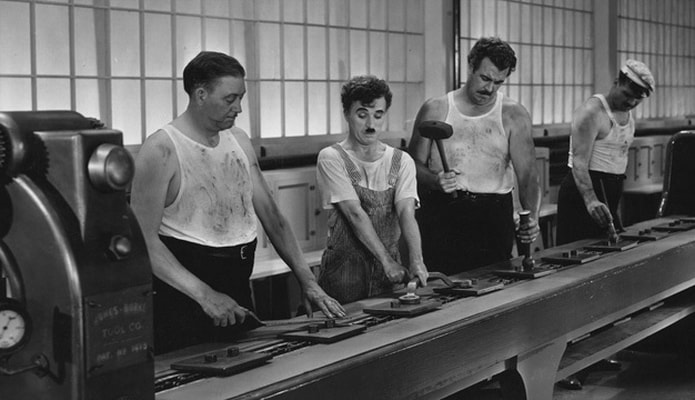 VICE magazine recently ran an article entitled “Four Ways the Climate Crisis Could Trigger a 2008-Style Economic Crash.” The four ways are:
1. “A devastating Florida hurricane bankrupts a major insurer,” which would have major ripple effects in the banking and financial sectors 2. “Insurers flee California wildfire zones and mortgages crater”: no property insurance = no new mortgages = banks cratering, too – not to mention reduced property values (& taxes) 3. “Massive declines in oil demand make investors panic,” which would be a paradoxical effect of the rush to zero emissions 4. “The housing market goes literally and figuratively underwater” – self-explanatory, but worth noting that “$100 billion in coastal mortgages are issued every year” Needless to say, these are not the only four ways. 5.) Water shortages, heat waves, and increased pest populations send food prices soaring; 6.) A hurricane ploughs right into lower Manhattan. And so on. Nor are they mutually exclusive: had hurricane Harvey made landfall a few miles to the northeast, it would have made a direct hit on the Houston ship channel, home to the second-largest petrochemical complex in the world. That scenario would have panicked at least a few oil investors and probably driven more than one major insurer into bankruptcy — and the rise in oil prices would have a significant negative economic effect. A lot of the paper money in the financial system would turn to ash overnight. Multiply this disaster by two in one year . . . well, you can see where this is going. And given the science, it’s hard to believe it won’t go there – probably sooner than we think (just ask the Australians). But what does it have to do with creative writing? Well, insofar as books are commodities, they are part of the capitalist system – a rather volatile, vulnerable part, whose role in the economy is less secure than that of oil. When there are major shocks to the system, publishing feels it hard. People have to pay rent; they don’t have to buy books. Commercial houses will publish fewer titles; independent presses will go under. There will be even more good books that go unpublished. Moreover, writers in the academy will face a double whammy. First, it will become harder for them to get their books published. Will the published book remain the status symbol it is now – the sine qua non for getting an interview, let alone tenure? “Why, I had six published books before I got tenure! We can’t tenure somebody with just four!” the old folks will intone; but of course, that will be because they could get books published at all. Secondly, such a severe downturn to the economy means a severe downturn in tax revenues. To the extent that most academics are employed by institutions dependent on public funds, that will mean hiring freezes, furloughs, financial exigency, layoffs. The slow-down of the creative-writing industry will become a free-fall, as programs shrink or close. So: what is to be done? Well, first, as I’ve argued on more than one occasion, our conception of publishing – esp. book publishing – has to change. Publishing means “making-public,” and that can happen on any scale. I would expect more books published in micro quantities, perhaps by hand press methods. A return of the Mimeograph Revolution. Circulation of manuscripts by hand. And a de-emphasis on the book as the primary vehicle for literature: more one-off stories and poems; serialized novels; orature and performance. Second, to the extent that there are any academic writers left, their colleagues should not obsess about the quantity of their work, but should evaluate the quality of their work — rather than shunt that task off to an editor or publisher by making publication a proxy for value. Perhaps publication should be one of the rewards of tenure and promotion, rather than a prerequisite – that is, maybe tenure and promotion should function like contests do today. Invitations to job interviews could be based on blind MS submissions – colleges could just tack on a surcharge for applying for CW jobs, just like presses do now with entry fees. Finally, and most importantly: PRODUCE LESS. Nobody is reading most of the books produced today because nobody can possibly read them all – there’s a market glut. Produce fewer of them. Or de-commodify them by making them by hand and giving them away; or memorizing them and performing them. This will take a lot more time; that’s a good thing. This is what Dale Smith refers to as “Slow Poetry.” I’d also argue for the flip side: slow reading & re-reading. Why burn through 20 books a month & forget what you’ve read? Why not spend a month on really getting to know one book? Or even one poem? All of this will mean that there will be fewer professional writers, in or out of the academy. But if things get bad enough (which they probably will, later if not sooner), there will be fewer professional anything, because there will be less of an official cash economy. So, if you’re a writer, you won’t be able to write as much as you might today. You’ll be improving your community’s resilience to climate buffeting; turning your lawn into a food garden with hardy crops; rigging up a solar array to run whatever appliances you have left; or forming a barter system or cooperative work-groups with your neighbors. Counter-intuitively, writing and reading (perhaps out loud?) might seem more integral to life than it does now — more (dare I say it?) life-affirming. Pro-social. Anti-bullshit. In other words, it’s about time, it’s about place. Place, in this context, means finding one where you can stay for an extended period of time. Getting to know it, which means getting to know the people in it. But that takes time. Everything takes time. And time is money. Being in a hurry = speed-up = commodification = “productivity.” [To be continued . . .] 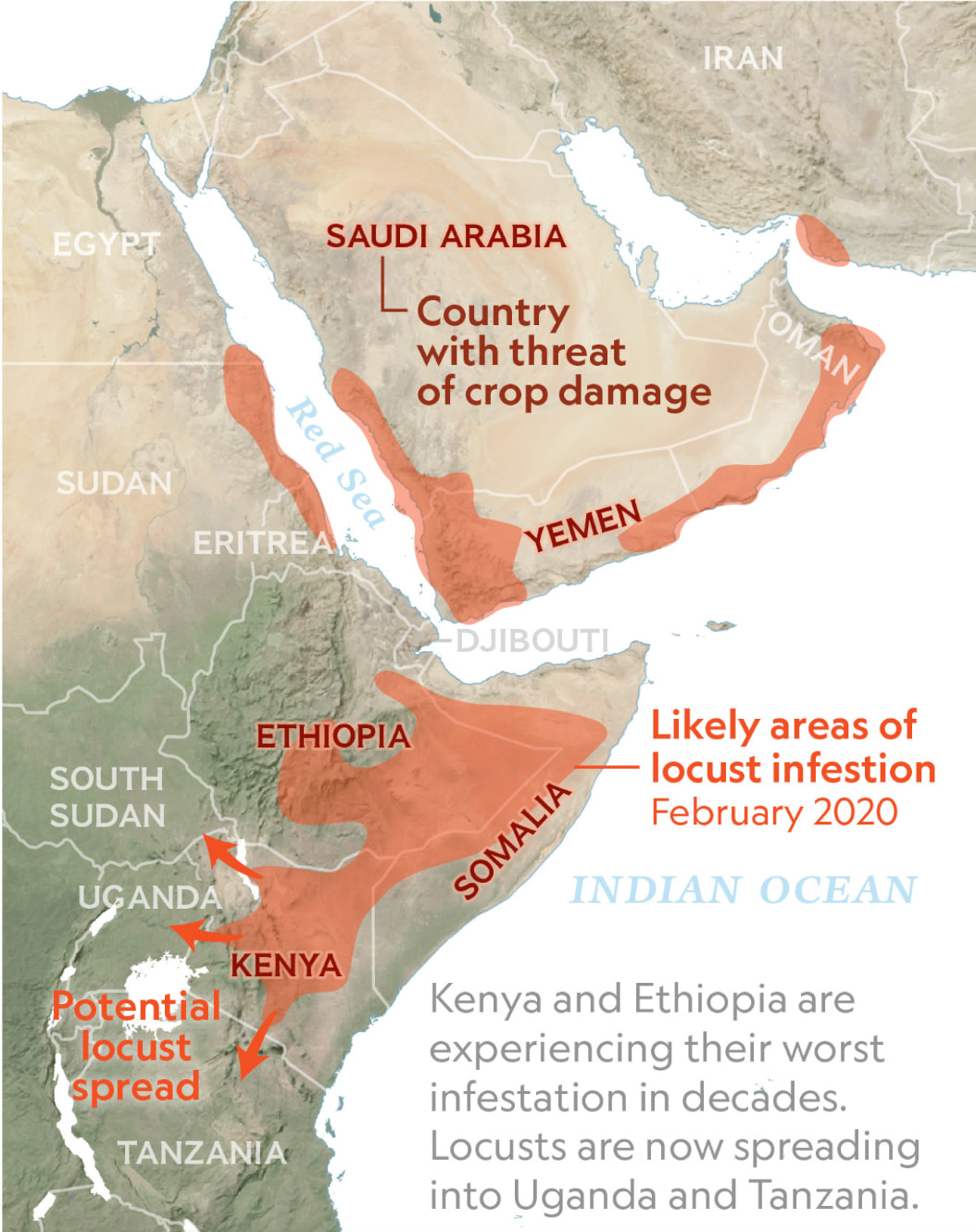 action-accu-weather data:
hi 2/17 65˚ f in lawrence, ks.; normal hi 44. can’t beat this weather, huh?! . . . well, actually, warmer winters bring more mosquitoes and ticks in the spring and summer & more skeet- and tick-borne illnesses; + more pests that eat food crops; & no freeze = microbes eat up soil nutrients all winter, depleting farmland; also cali produce $↑ (less snow = less water); bark beetles never die back = dead pines; & skiing? foggedaboutit! they’re skiing indoors in norway . . . in response to all this, the protesters dig up the lawn at trinity college cambridge (big fossil fuel portfolio) & get a mention in newsweek . . . almost no snow in s. korea; or ice in the moscow river; the sylvan wye hits highest level on record (u.k. flood warnings at record 594) 66 f in belgium on 2/16 (a record); 107 mph winds in germany the locusts continue spreading in e. africa and middle east, destroying crops — worst in 70 yrs.: “there is a link between climate change and the unprecedented locust crisis plaguing east africa,” the u.n. secretary sez. “warmer seas mean more cyclones generating the perfect breeding ground for locusts” & in the ee.uu., rivers already rising: 2 houses slid into the tenn. r. over the weekend (“it ab- solutely kills you, knowing that”) rains 400% of normal; pick- wick dam, where i fished as a kid is flooded; & the pearl river in mississippi passes major flood stage; sez the gov.: “while we did get two beautiful days of sunshine, do not let that lull you into a false sense of hope” ok. but i’m going to shut down the computer, leave all this, & go enjoy the beautiful sun- shine where i am, this funny weather we’ve been having, huh? |
Archives
June 2021
Kristin Prevallet Author/Editor
I'm a writer & teacher in Lawrence, Kansas who actually believes the scientists. I wrote a book of poems called Of Some Sky that seems to have something to do with all this. |
 RSS Feed
