 march did not go
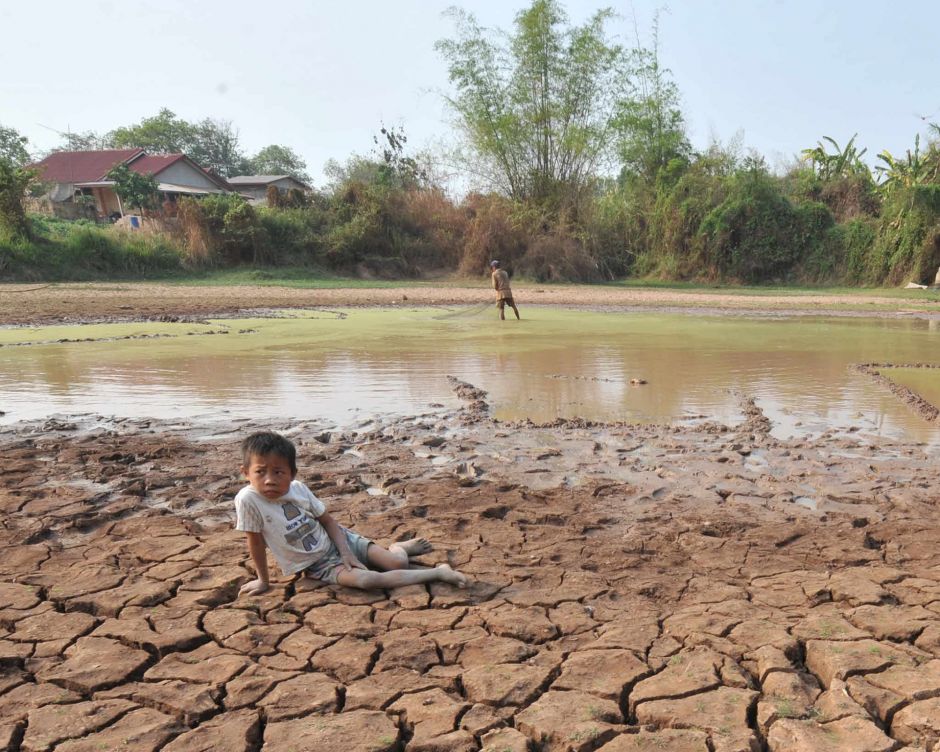
out like a lamb in n.e. ks. -- several days of hi winds -- but today, quiet; still, 10˚ f > norm hi yesterday; flowers bloom early, birds arrive early, both a bit discombobulated but so are we, what with coronamania & all -- about time we took our minds off it, focus on other things -- like . . . global climate chaos: sure, if we all kept living this way, we’d have it licked; but everybody’s got to make a living, even if it kills them; economic stimulation always means stimulating lots of carbon-based compounds but meantime: florida drier than death valley during march + hot, too (80s & 90s f) = 87 wildfires, burn bans; while 80” of rain fell in kauai; while rice prices go ↑ & ↑ as drought grips thailand, vietnam: rainfall ↓ 30% upstream on mekong; monsoons 2 wks late, ended 3 wks early; & 18 firefighters dead during forest fire in s.w. china, "directly threatening the safety of xichang city”; 9 flood deaths, n.w. pakistan; 7, in n. syria; these people had lives . . . but climate chaos doesn’t follow a curve: it’s a hurricane here, a drought there, wildfires someplace else, flooding in another locale, pestilence hitting another region; its just that this is happening oftener, simultaneously, more intensely; & people are moving to where they think they will be safe -- unless those places run out of water, food, housing, too unless you’re australian, all that seems far away in time and space: not like body-bag trucks outside the hospital in yr childhood neighborhood; the prez finally stops acting like that persian emperor who ordered the sea to be beaten for disobeying him; but we will just beat it in a different sense, as seas rise, dis- covering too late that any- place can sink, anyplace, burn
0 Comments
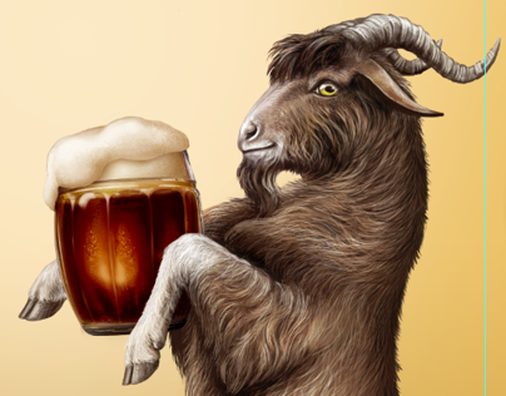 On the day and time Of the passing of man Pots and kettles Will reconcile Each will welcome The other’s black From the same gourd They’ll drink wine And from the same bowl They’ll eat yams Feeding each other gently In soft stewed mounds * Hens will borrow the moon’s abacus And take it to the coop But just because They borrow its abacus Doesn’t mean They’ll sing of the moon They’ll pull the beads And sing instead Of raised and feathered necks Breeze beneath the cypress And of love between gators Octopi and ferrets – Those gained and others Unrequited * Goats will get drunk On beer carefully brewed To turn cheeks red Or gently rouge And warm from days Of song and drink Mugs raised To nanny-goats In blouse And skirts trimmed They’ll raise their legs In beat and rhyme To tunes that echoed From old men’s hearts On the day and time Of the passing of man ______________ Abayomi Animashaun is an immigrant from Nigeria. He holds an MFA from the University of Nevada, Las Vegas and a PhD from the University of Kansas. His poems have appeared in several print and online journals, including Diode, TriQuarterly, The Cortland Review, African American Review, Southern Indiana Review, The Adirondack Review, Passages North, and Versedaily. A recipient of the Hudson Prize and a grant from the International Center for Writing and Translation, Abayo is the author of three poetry collections, Seahorses (Black Lawrence, 2020), Sailing for Ithaca, and The Giving of Pears, and the editor of three anthologies, Far Villages: Welcome Essays for New & Beginner Poets (Black Lawrence, 2020), Others Will Enter the Gates: Immigrant Poets on Poetry, Influences, and Writing in America, and Walking the Tightrope: Poetry and Prose by LGBTQ Writers from Africa (with Spectra, Tatenda Muranda, Irwin Iradunkunda, and Timothy Kimutai). Abayo teaches writing and literature at the University of Wisconsin, Oshkosh and lives with his wife and two children in Green Bay, Wisconsin. 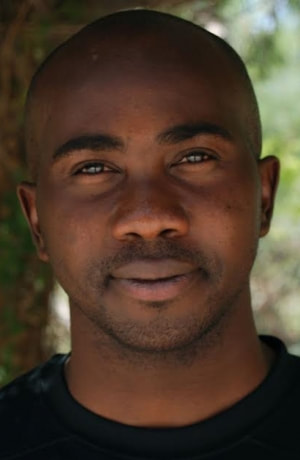
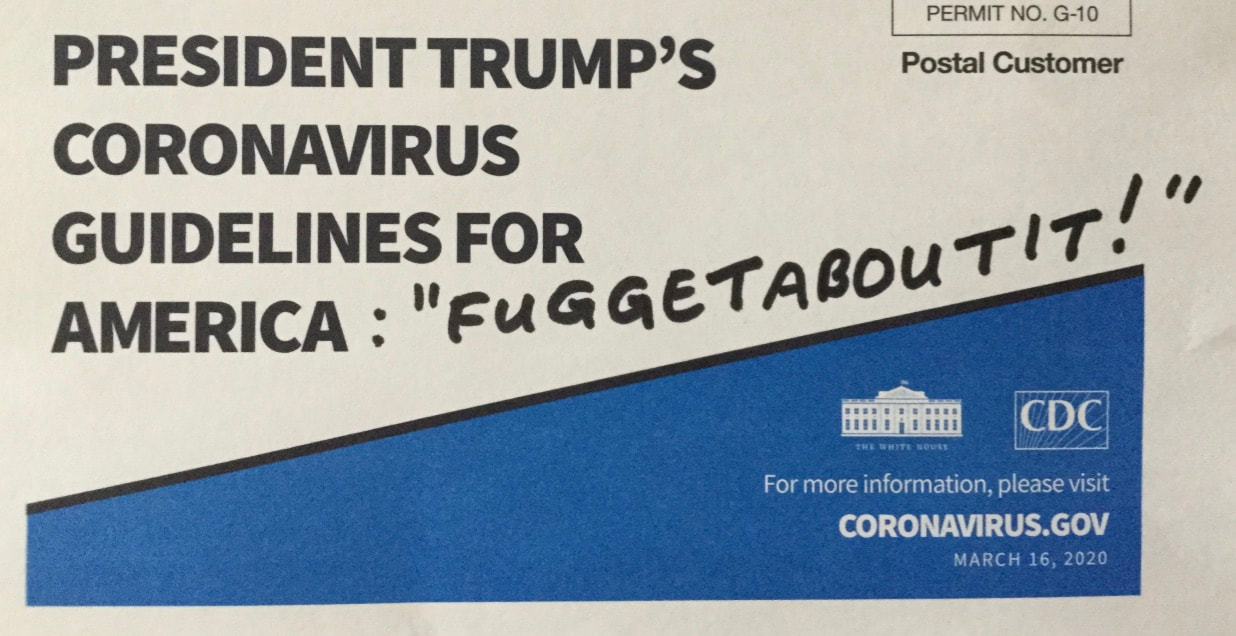 honest to god, people --
i’m tired of living in a fucking science-fiction novel! but do we have to let this crisis go to waste? the prez sez cars kill more people than covid. ok — so, let’s quarantine cars, too, how bout? but what will pandemic do to global efforts to save the globe?: "rapid spread of c-virus could derail major climate conferences that provide a crucial platform for countries to commit to more ambitious goals to cut carbon emissions”: lots of dependent clauses in that definite declaration: trans: the suits can’t spew kilotons of co2 into the blue jet-setting to big to-do’s where countries do nothing for you . . . (make that “for countries to commit to more ambiguous goals that they have no intention of meeting anyway”) but here in topeka, as loretta lynn sings, the door keeps a-slammin’ . . . yesterday, hi w/in 7˚ of norm; but it’s the hi lo’s that get u: 52 f v. 36 norm — i.e., the humidity abateth not one crisis here and one’s on the waaaaay . . . great lakes stay at record high water levels just in time for spring rains; with hail in san francisco, feet of snow in the west, & 100+ f heat in the south; power goes out & 2 die in aden flooding; morocco’s govt. promises 2.5 m quintals of barley to droughted farm regions, leading to the question: what the hell is a quintal? plus: a veritable drought of x-treme weatherclimate news; it slowed to a trickle small as an australian river . . . sure, there’s the usual stuff: the locusts still spread throughout e. africa; 100,000s of climate refugees cheek-to-jowl in (infected?) displaced-persons camps; a hunk of glacier the size of atlanta plops off into the sea in antarctica, which may have just had its highest temp ever; krill #s down, so penguins, too; worst bleaching event ever in great barrier reef; (this isn’t that complicated, u know) even weather modelling suffers: too few research planes in the air (pandemic & all); o & speaking of ‘stralia: they’re still counting up costs: dead livestock, ash-filled rivers (dead fish and oysters); aboriginal communities a- palled with grief & money- less-ness; everyone sucking in the black smoke, then hunkering under the pelting rain. now: shelter in place, y’all! but as nietzsche & kanye say, that which does not destroy me makes me stronger -- w/that “sense of community; we were all in it together to help each other. it was in- spiring and it gave you a lift. you weren't alone. that's all finished” — until something destroys me . . . & in the second-to-last chapter, the 1%ers decide they’ve lost too much damn cash & it’s time for you to go back to work-- “back to work, you!” -- into the pandemic pandemonium, to suck it up, work it out somehow — & you say “please sir i want some more,” giving us some foreshadowing of what the last chapter might hold, when they mutter “that boy will be hung. i know that boy will be hung.”  Here’s an interesting “student opinion” editorial in the NY Times, by Nicole Daniels: “What Role Does Poetry Play in Your Life?” (We could even expand that to ask what role literature — or writing generally — plays in your life.) Apparently, at the morning meetings of the National Desk (of the NYT, one assumes), they start by reading a poem. There’s talk of “the magic of poetry,” of Billy Collins, of William Wordsworth: nothing that would challenge your idea of what you already think you know about the way language supposedly works — or alter the way we interact with it. But clearly writing that means something to somebody. Then the author asks a series of excellent questions:
How do you know if you like a poem? Does it make you feel certain emotions? Does it make you think about things differently in your life or in the world? Or, do you prefer silly or ironic poems that make you laugh? . . . How do you think poems can inspire us or change the way we view the world? When you experience hardship or pain, do you ever turn to poetry? Are there other art forms or creative expression that you seek out or create in difficult moments? These are variations of the perennial, very American question: Poetry?? What’s it good fer? I like poems that both make me feel emotions (certain or not) and make me think about things differently (and think different things) and make me laugh. So there. It’s the second para that interests me most: the idea that poetry can (implicitly) ameliorate hardship, pain, or difficult moments. Poetry as the opiate of the masses? Sure: why not? Better than real opiates, for sure. But I like Wallace Stevens’ definition in “Of Modern Poetry”: “The poem of the mind in the act of finding / What will suffice.” What, that is, that makes the world equal to desire, or even make life worth living? But it’s the act of finding, not the thing found. Because for Stevens, it’s a continuous process. The world is constantly changing, so our mind keeps looking. Avant-gardey people poo-poo some poetry as sentimental or sententious. More mainstream readers poo-poo avant-garde poetry as being obscure and elitist. Both are right. What suffices for one won’t for another. In these times of pandemic and epochal atmospheric alterations, let us remember that “de gustibus non disputandum est.” Whatever gets you through the night. “the cure is worse
than the disease” “the cure is worse than the disease” “the cure is worse than the disease” – meaning: money is more important than human life -- where have we heard this before, & in what other contexts? meaning: if you like the way katrina was handled, you’re gonna love this -- meaning: this is the way they’ll handle the next katrina-corona, & the next & the next . . . (& the folks in africa think “yeah? . . . so? . . . welcome to history”) but “comparing coronavirus to climate change is like comparing apples to the whole idea of fruit” * (to the extent that we still have fruit, that is) emissions drop (nobody drives); but so do oil prices meanwhile downpours & wadiwashers inundate towns from iran to murcia to morocco; 700 displaced in e. papua new guinea; drought in turkey’s breadbasket; another tornado in mississippi, w summer- like temps in s.e. u.s. — the usual stuff, right? but nothing on the guardian’s “natural disasters & x-treme weather” page for 3 days; climate & weather news ↓ as coronavirus news ↑↑↑ -- but first things first, right? & if you don’t hear about it, it must not be happening; or, if it’s happening, it must not be important enough to report or somebody wants to see those pews full come easter . . . “climate change is the result of too much political & economic power being placed in the hands of too few people. . . . [& when that happens,] things get real bad, real fast.” * why do you look for the living among the dead? serious question ______________________________ This quotes from Amy Westervelt in Huffington Post. On January 8 I posted about the character Stubb, in Moby-Dick. That post has since gotten comments from a couple of our foremost Melville scholars and teachers, Elizabeth Schultz and Haskell Springer. It is worth reading their comments.
 I’ve read a number of works of climate fiction that have an additional precipitating or consequent disaster or emergency involved. Maybe it’s an earthquake (Odds Against Tomorrow). Maybe it’s sudden mass immigration or emigration (The Wall). And maybe it’s contagion. I can think of several in this last category. Margaret Atwood’s MaddAddam trilogy immediately comes to mind (in which a pandemic becomes a “waterless flood”); Edan Lepucki’s novel California, in which the central characters flee metro L.A. due to a flu epidemic; Omar El Akkad’s American War, which involves weaponized microbes; there’s some kind of biological transmission and rearrangement happening in The Future Home of the Living God, by Louise Erdrich; and even Octavia Butler’s Parable of the Sower features a disastrous epidemic of drug addiction, along with the social chaos caused by climate chaos.
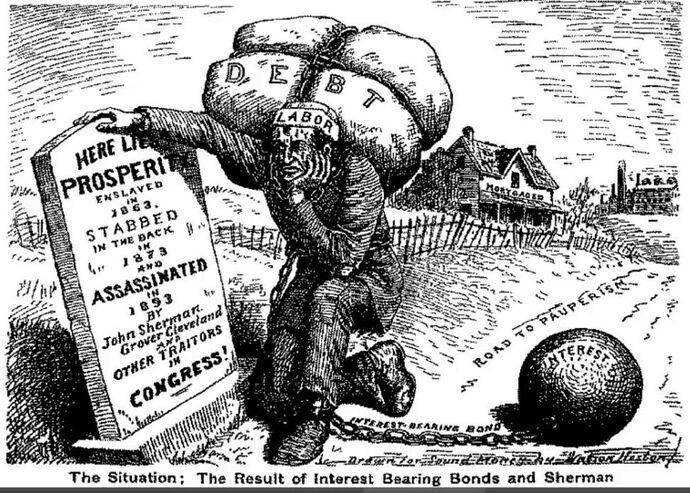
These tales of confluent crises remind us that disasters don’t happen one at a time, and their effects are not unitary. Just ask the people in Zagreb. Or people in any of the countries mentioned in “Poem of Our Climate” the last couple of weeks. Destruction of forests accelerates global heating; it also causes geographic shifts of mammalian species into human settlement areas; which can cause pandemics. Warmer weather can cause the growth of fungi or bacteria that cause crops to fail, leading to forced mass migrations. Wetter weather can breed locusts, leaving decimated farms and farmers who have no choice but go to resettlement camps (which are good breeding-grounds for disease). Competition for increasingly scarce natural resources — e.g., water — can cause war (possibly involving nuclear weapons). And any of these can lead to financial panics and economic implosion. The drought, floods, and pestilence will still be heading for us, after we go back to work. What to write in the face of that? Dystopian fiction seems kind of beside the point (“yeah. so?”), though tons of it is being produced. By contrast, it’s hard for me to think of recent utopian fiction; by recent, I mean in the last 10 years — even 20. Perhaps you can — and perhaps you’ll be kind enough to list them in the comments section below! But I certainly don’t see anything like the Bellamy Societies that sprang up in the 1890s, inspired by Edward Bellamy’s utopian novel Looking Backward. There was a lot of optimism in those dark days. The Populists gained majorities in state legislatures; the Socialists began a rapid rise to power in numerous towns and cities; and the Progressives got much of their agenda enacted (albeit watered down). Those movements, along with the labor movement of the 1930s, were born of economic desperation — farmers going bust, workers worn out before they were 40, disease-ridden cities, plus deceit and main force used by the gilded super-rich. In other words, kind of like now. But perhaps our “quarantine” will give us time to spin out narratives by which the economic and physical pain people are enduring can find expression in a movement that produces a carbon-neutral, equitable, healthy world. 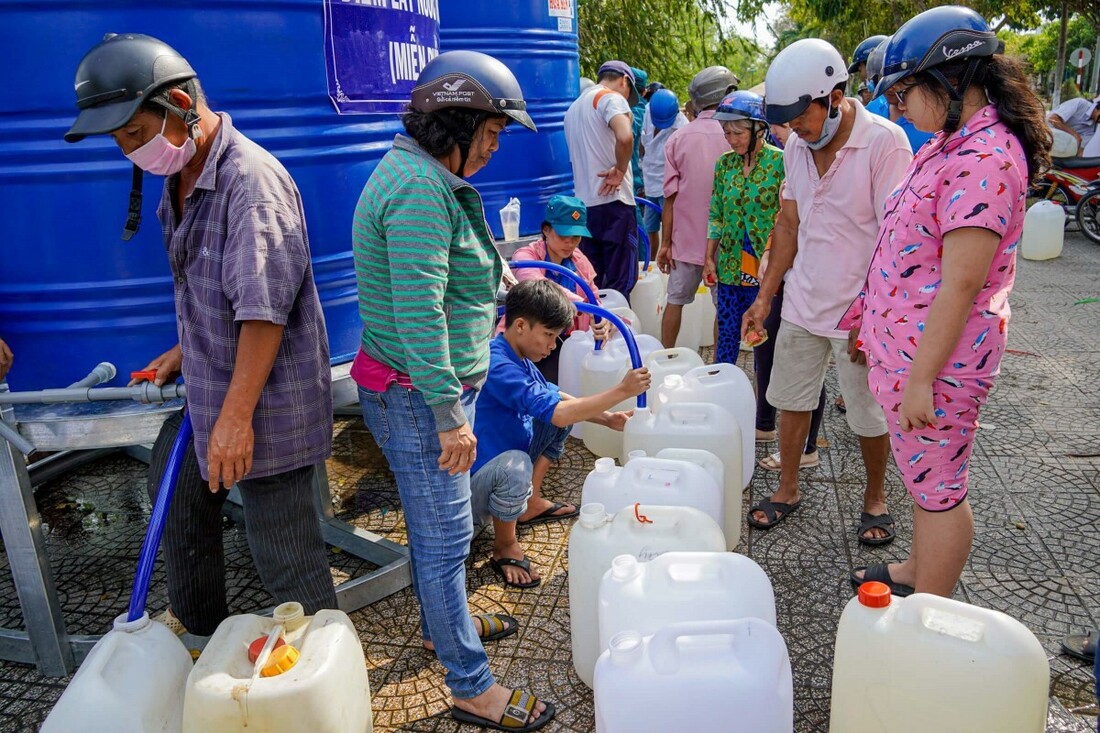 forbes mag suggests
this nature-driven econ crisis may portend what’s climate chaos will do (or what we will in response): “financial drivers for execs & markets = tax cuts, 0% interest, short-term gains [and the occasional bailout] not real-world factors like profitability, unit economics, or climate science” (or epidemiology, it appears) “7 best trees to plant in small gardens” next to “kenyan farmers brace for second onslaught of crop-devouring locusts” -- & what happens after the locusts die back? or to those ornamental trees when it’s too hot to grow them? but: happy belated world water day! (3/22: who knew?) many in chile celebrate by choosing between drinking water, washing hands with it (20 sec!) or watering their veggies (record drought won’t stop; & big ag gets the h2o); in parts of vietnam, they now truck in fresh water b/c the tap water = salt water (that drought in the mekong delta, dont you know); “water is now as precious as gold. it would be a sin to waste even a drop of it that they brought from 100s of km away” meanwhile: it’s flooding in the u.a.e. (true!), also iraq, turkey, moldova; & iran, hit hard by virus, loses ≥ 11 people so far in spring flooding — hopefully not a repeat of last year; 6 dead of flooding in indiana; even the dogsled race in alaska disrupted by inundations (what with the snow melting & all) ~400 dead from smoke from australian wildfires; & food prices go ↑ & ↑ (1st wildfire, now crisis capitalism — i.e., gouging) but now the good news: bumper crop of butterflies for the u.k. last summertime! a bumper crop of froggies here in douglas co., kansas; & they can raise wine grapes in scandinavia now -- yay scandinavian wineries! so tune in for our next exciting episode . . . will il trumpe give $2 trillion to cronies in his carbon-farting party? will the let-up in co2 emissions survive the pandemic? will the economic meltdown spur a switch to a green economy? find out here — in the . . . poem of our climate 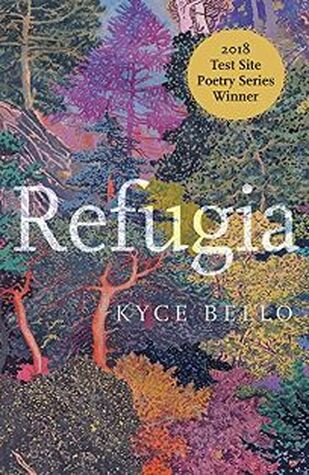 “Refugia,” the book’s epigraph reminds us, “are areas of relatively unaltered climate that are inhabited by plants and animals during a period of continental climatic change . . . and remain as a center of relict forms from which a new dispersion and speciation may take place after climatic readjustment.” The very word “refugia” is, therefore, what Northrop Frye termed a romance: a narrative that looks at first like a tragedy, but is redeemed at the end — not exactly into a comic conclusion, but at least a more hopeful one.
And that is the feeling I got from Kyce Bello’s first poem collection, Refugia. Indications of a changing ecosystem pepper the poems: “Our trajectory a measure / of water stress, // three death a status in three: plant, region, globe.” So, “here we are at collapse,” and yet — and yet, “Though sun reaches our faces // we hold ourselves apart / and name ourselves // after what we have survived.” This passage, from the first of nine sections of the title poem, which are dispersed over the course of the book, is indicative: the signs of planetary crisis are all around, in the plants and animals of an apparently rural New Mexico setting, but the speaker (and nuclear family) at the center of things will find beauty in life nonetheless, and carry on. Wallace Stevens wrote that modern poetry is “the mind in the act of finding / what will suffice,” and I get a sense of a mind doing just that, in this book, in spite of increasingly insufficient resources. “For decades,” Bello writes, in “The Tree Coroners,” the scientists have “watched two degrees determine / by which means a tree will choose to die — / hunger or thirst.” Yet the speaker dreams of “resurrection ferns unfurling”; so “Which boast to believe? My own, / or their malediction?” What scientists see as prediction — becomes a “malediction,” suggesting some degree of resistance to (or shocked disbelief of) the conclusions to which their evidence points. There is the evidence of the senses, too: “It’s been June all January. Like the creek, / I’ve turned to sand.” What to do, if you live in an arid land? “Among our options there is creeping north // like moose fleeing ticks, / and yet I want to stay still” . . . . The options are flight or freeze. The speaker knows they’re contributing to the problem, but can’t stop, but wishes someone would solve it: “I drive to the market for more flowers // wishing that driving were already banned” . . . . But the lyric “I” always seems to look on the bright side of life. The family travels “dirt roads that exhaust us / with die-off — every confier between Platoro / and South Fork shaggy-limbed and gray, snags / mapping the mountain’s black lung”; but at least there is arnica growing in the clearings, “the yellow sprawl of petals caught / in long shafts of unhampered, unblocked light.” I guess the poem registers both the sadness of mass tree-death and also the making-do of clipping some of the medicinal herb and driving on. And I guess that’s a good thing. At least a way to carry on. One doesn’t get the sense of urgency or immediate existential threat in Refugia that one gets in the work of mónica teresa ortiz (see March 10). However, there is occasionally a hint that the speaker understands that the climate crisis is a threat not just to the trees, but to their way of life. Even if “[s]natched remnants of the old world crowded / into this refuge” of a canyon, still, it’s with “our houses burned behind us.” In one very fine serial poem, “Archipelago with Ancestral Bodies and Unnamed Landmarks of the Present,” we detect the voices of other people . . . who seem rather concerned: One records the names of birds her children will not know; One wants to marry but not be a stepmother; One says, thank you for listening to me keen with my words; One adds, it is the finality that is so hard; One waits for hummingbirds to bring messages; One can only wonder at the line she tries to draw, insistent in its wavering across the page. The last section of “Refugia” is perhaps the darkest: “O, pre-dawn // water potential, how I do fear your / reduction”; the family is snapping at one another and “Who has studied // our survival and can tell me when this / degree / of tension will decrease?” Nonetheless, the poem ends with an image of an apple tree sprouting again from a stump and mother taking child into her arms, “Nestle her against my belly, // where she still fits.” I am not a parent — in no small part because of the perils & fears that Bello’s book makes very clear. But if I were, I imagine I would have to find a supreme fiction, in the face of even the best of the worst-case scenarios. I am genetically & culturally predisposed to a gloomy view of things (another reason to avoid reproducing!); but I also think it’s downright healthy (not to mention rational) to consider worst-case scenarios — both as a way to prepare for them (mentally and logistically) and maybe spur us to try to avoid them. But there still needs to be something worth preserving — virtue, beauty, humanity, religion, or the existence of life itself — that allows one to carry on. Refugia is in the tradition of American nature poetry, and as such is often compelled to dispense wisdom and maintain a tone of earnest wonder. Nonetheless, unlike most nature poems, these attempt to take account of the ways in which the nature of nature is changing — and to find a way for a human family to continue to live with(in) it. |
Archives
June 2021
Kristin Prevallet Author/Editor
I'm a writer & teacher in Lawrence, Kansas who actually believes the scientists. I wrote a book of poems called Of Some Sky that seems to have something to do with all this. |
 RSS Feed
